
Multiple topological states in LaAgAs2, a failed square-net semimetal
ISOM keeps this npj Quantum Materials paper in the public review set because it gives readers a concrete case around Multiple topological states in LaAgAs2, a failed square-net semimetal through its mechanism,...
Background & Academic Lineage
The Origin & Academic Lineage
The problem addressed in this paper originates from the broader academic pursuit of discovering and designing novel topological materials. These materials are a fascinating class of matter characterized by unconventional electronic and transport properties, stemming from their topologically nontrivial band structures [1-3]. Historically, the field has seen significant effort devoted to identifying new topological materials [4-8], with a successful strategy involving the "LEGO-like building block approach" for layered materials. This approach assumes that the electronic structure of individual building blocks retains its main features when embedded in larger structures [9-12].
However, this assumption represents a fundamental limitation or "pain point" in previous approaches. In real materials, the local chemical environment and structural distortions can significantly tune both the crystal and band structures of these building blocks. Therefore, to improve the efficiency and accuracy of desing new topological materials, it became crucial to clarify the impact of such structural distortions and to explore new types of building blocks.
The planar square lattice, due to its simplicity and prevalence, has been a focal point of extensive theoretical and experimental intrest [10]. It's been linked to various intriguing phenomena like anisotropic Dirac fermions [18, 19], charge density waves (CDWs) [20, 21], and superconductivity [22]. Crucially, real square lattices can undergo structural distortions, such as transforming into zigzag chains or cis-trans chains, which profoundly alter their electronic structure and related physical properties [27]. While zigzag chains have been observed and studied [37], experimental validation for the effects of cis-trans distortion on electronic structure has been lacking, primarily due to the scarcity of suitable materals.
This paper specifically addresses this gap by studying LaAgAs$_2$. LaAgAs$_2$ shares a crystal structure similar to LaTSb$_2$ (a known square-net-based semimetal), but its planar layer is distorted from a simple square net into As cis-trans chains [38]. Previous studies on LaAgAs$_2$ primarily focused on its crystal structure [38-40], leaving its electronic structure and physical properties largely unexplored, likely due to the difficulty in synthesizing high-quality single crystals. The core problem, therefore, is to experimentally and theoretically investigate the electronic structure of LaAgAs$_2$ to understand how cis-trans distortion impacts its topological properties, especially given its initial expectation as a square-net-based topological semimetal. The authors reveal that LaAgAs$_2$ is a "failed square-net semimetal" in the sense that the expected square-net-derived Dirac bands are transformed into quasi-1D trivial bands, yet it hosts multiple other topological states.
Intuitive Domain Terms
- Topological Semimetal: Imagine a special kind of electronic material where electrons can move almost effortlessly, like cars on a superhighway, even if there are some bumps or detours. These "superhighways" are protected by the fundamental "shape" (topology) of the material's electronic energy landscape, making their unique properties very robust.
- Square Net: Picture a perfectly flat, repeating pattern of atoms arranged in a grid of squares, much like a checkerboard. This simple, ordered atomic arrangement is called a square net, and it's often a key structural feature in materials with interesting electronic properties.
- Cis-trans Distortion: Now, imagine that perfect checkerboard of atoms gets squished and twisted. Instead of neat squares, the atoms form zig-zagging lines or chains. "Cis" and "trans" describe specific ways these twists can happen, leading to a wavy or alternating pattern rather than a straight, uniform one. This structural change can dramatically alter how electrons behave.
- Dirac Fermions: Think of electrons in a material that behave like tiny, massless particles, similar to how light particles (photons) move. Their energy increases perfectly linearly with their momentum, making them incredibly fast and efficient charge carriers, unlike regular electrons which have a "weight" (mass).
- Spin-Orbit Coupling (SOC): This is like a dancer's spin influencing their balance and movement across the stage. For electrons, their intrinsic "spin" (a quantum property, like a tiny internal magnet) interacts with their motion around atomic nuclei. This interaction can significantly change the electron's energy and path, playing a crucial role in creating topological states.
Notation Table
| Notation | Description | Type |
|---|---|---|
| $F$ | Quantum oscillation frequency | Variable |
| $\Phi_0$ | Magnetic flux quantum | Parameter |
| $A_F$ | Cross-sectional area of the Fermi surface | Variable |
| $m^*$ | Effective mass of charge carriers | Variable |
| $\hbar$ | Reduced Planck constant | Parameter |
| $E(k)$ | Electron energy as a function of momentum $k$ | Variable |
| $k$ | Electron momentum | Variable |
| $R_T$ | Thermal damping factor (Lifshitz-Kosevich model) | Variable |
| $\alpha$ | Constant in Lifshitz-Kosevich model | Parameter |
| $k_B$ | Boltzmann constant | Parameter |
| $m_e$ | Free electron mass | Parameter |
| $e$ | Elementary charge | Parameter |
| $B$ | Magnetic field | Variable |
| $\rho_{xx}$ | In-plane resistivity | Variable |
| $\rho_{xy}$ | Hall resistivity | Variable |
| $E_F$ | Fermi level (energy at which electrons fill states) | Parameter |
| $a, b, c$ | Lattice parameters (crystal unit cell dimensions) | Parameter |
| $h\nu$ | Photon energy (used in ARPES measurements) | Parameter |
| $k_z$ | Momentum component perpendicular to the surface | Variable |
Problem Definition & Constraints
Core Problem Formulation & The Dilemma
The primary problem addressed by this paper stems from a fundamental challenge in the rational design of new topological materials. Historically, a "LEGO-like building block approach" has been employed, where researchers stack structural motifs, assuming that the electronic structure of these blocks remains largely intact when embedded in a larger material [9-12]. This simplification, while useful, often clashes with the complex reality of real materials.
Current State (Input):
Previous research on square-net-based topological semimetals, such as AMPn2 compounds (e.g., LaAgSb2), largely attributed their intriguing electronic and transport properties to the robust Dirac bands arising from the planar Pn square lattice [10]. However, it was known that in real materials, these square nets could undergo structural distortions, such as forming zigzag or cis-trans chains, which would inevitably alter their electronic structure and physical properties [27]. Specifically, LaAgAs2 was identified as a material with a crystal structure similar to LaTSb2, but with its planar layer distorted from an ideal square net into As cis-trans chains [38]. While theoretical predictions suggested that such Peierls-like distortions could significantly modify the square-net-derived band structure, potentially transforming 2D linear Dirac bands into quasi-1D trivial bands [14], experimental validation for these cis-trans distortion effects was largely absent due to the lack of suitable, high-quality materials [6]. Prior studies on LaAgAs2 focused mainly on its crystal structure, leaving its electronic structure and topological properties largely elusive [38-40].
Desired Endpoint (Output):
The goal is to precisely clarify the impact of cis-trans structural distortion on the electronic band structure and topological properties of LaAgAs2. This involves experimentally identifying the specific topological states (e.g., Z2 topological surface states, bulk Dirac states) present in LaAgAs2 and correlating them directly with the observed cis-trans chains. The ultimate aim is to provide a comprehensive understanding of how this distortion transforms the expected square-net-derived Dirac bands and influences the material's overall topological character, thereby offering a guideline for the intentional design of new topological materials.
Missing Link / Mathematical Gap:
The exact missing link is the direct, comprehensive experimental and theoretical verification of how the cis-trans structural distortion in LaAgAs2 quantitatively and qualitatively alters its electronic band structure and topological characteristics. While theoretical models predicted that such distortions could transform 2D linear Dirac bands into quasi-1D trivial bands [14], a precise mapping of this transformation and its implications for the emergence or suppression of specific topological states was lacking. The paper aims to bridge this gap by combining advanced experimental techniques (single-crystal X-ray diffraction, quantum oscillation, angle-resolved photoemission spectroscopy) with first-principles density functional theory calculations to provide a complete, self-consistent picture of this structure-property relationship.
The Dilemma:
The core dilemma that has "trapped" previous researchers is the painful trade-off between the idealized "LEGO-like" material design strategy and the complex reality of structural distortions. While the building block approach offers simplicity and predictive power by assuming stable electronic structures of constituent motifs, real-world materials often exhibit local chemical environments and structural distortions that can fundamentally tune or even destroy the very topological features one intends to design [5]. For square-net-based semimetals, the expectation of robust Dirac bands from the Pn square net was a cornerstone. However, the possibility of distortions transforming these desired topological Dirac bands into trivial ones presented a significant challenge. The lack of suitable high-quality materials for experimental validation of these distortion effects, particularly for cis-trans chains, meant that theoretical predictions remained largely unconfirmed, hindering the rational design of new materials with desired topological properties.
Constraints & Failure Modes
The problem of understanding the impact of cis-trans distortions on topological materials like LaAgAs2 is inherently difficult due to several harsh, realistic constraints:
- Material Synthesis and Quality (Physical Constraint): A major hurdle was the "lack of high-quality single crystals" in previous studies [6]. Obtaining high-quality single crystals is crucial for reliable experimental measurements such as quantum oscillation and ARPES, which are highly sensitive to material imperfections, grain boundaries, and twinning. Without such crystals, experimental data would be ambiguous or misleading, preventing clear conclusions about the intrinsic electronic structure. The authors had to overcome this by successfully synthesizing high-quality LaAgAs2 single crystals using the self-flux method.
- Structural Complexity and Twinning (Physical/Data-driven Constraint): LaAgAs2 crystallizes in an orthorhombic structure with the square net distorted into cis-trans chains [6]. This inherent structural complexity, combined with the observation that the crystals are "twinned" [10], significantly complicates both experimental measurements and data interpretation. Twinning can mask or alter the intrinsic anisotropic transport properties, leading to observed symmetries (e.g., four-fold MR symmetry instead of two-fold) that do not reflect the true quasi-1D electronic character [10].
- Discrepancies Between DFT and Experiment (Computational/Data-driven Constraint): Even with advanced computational methods like DFT, accurately modeling the electronic structure of such complex materials is challenging. The paper notes "discrepancies between the calculated and measured Fermi surfaces," particularly regarding the size and presence of certain electron pockets [13]. These discrepancies are attributed to the "electron pockets being very sensitive to the structure of these chains," implying that subtle details of the cis-trans distortion are difficult to capture perfectly in theoretical models, making precise predictions hard.
- ARPES Probing Depth and Resolution (Physical/Data-driven Constraint): Angle-resolved photoemission spectroscopy (ARPES), a powerful tool for mapping band structures, has limitations. The paper states that both the Topological Surface State (TSS) and Topological Dirac Semimetal (TDS) states in LaAgAs2 are located "well above the Fermi level," meaning they "cannot be captured by ARPES measurements" [14]. This shallow probing depth and energy window limitation restrict the direct experimental observation of all relevant topological features.
- Wannier Orbital Localization (Computational Constraint): For surface state calculations using methods like the surface Green's function, generating "well-localized Wannier orbitals proved challenging" due to the "highly delocalized nature of the La's d orbitals and As1's p orbitals" [14]. This computational difficulty hinders accurate theoretical predictions of surface topological states.
- Interpretation of Multiband Transport (Data-driven Constraint): Hall resistivity measurements revealed "multiband behaviors," but "accurate fitting using a two-band model is challenging" due to the nearly linear characteristics of the $\rho_{xy}(B)$ curves [7]. This makes it difficult to deconvolve the contributions of different carrier types and precisely determine their concentrations and mobilities, complicating the interpretation of transport data.
- Surface Termination Ambiguity (Experimental/Data-driven Constraint): When cleaving crystals for surface-sensitive techniques like ARPES, multiple surface terminations are possible. The paper notes that ARPES "could not distinct between different terminations" [12]. This ambiguity makes it difficult to definitively attribute observed surface states to a specific termination, potentially obscuring the true surface electronic structure.
Why This Approach
The Inevitability of the Choice
The comprehensive, multi-modal approach adopted in this study—combining single-crystal X-ray diffraction (XRD), quantum oscillation measurements (de Haas-van Alphen, dHvA, and Shubnikov-de Haas, SdH), angle-resolved photoemission spectroscopy (ARPES), and density functional theory (DFT) calculations—was not merely a choice but an essential necessity. The authors faced the intricate challenge of fully characterizing LaAgAs2, a material whose electronic structure was expected to be significantly altered by structural distortions, deviating from the typical behavior of square-net-based semimetals.
The exact moment the authors realized traditional "SOTA" (state-of-the-art) methods, when applied in isolation, were insufficient can be inferred from the paper's motivation. Previous research on related AMPn2 compounds primarily focused on tuning band structures by manipulating buffer layers, largely overlooking the crucial impact of structural distortions within the square net itself (p.5). For LaAgAs2, earlier studies were limited to crystal structure determination, leaving its electronic and topological properties largely unexplored, partly due to the difficulty in obtaining high-quality single crystals (p.6).
A single technique would have provided only a partial, potentially misleading, picture. For instance, XRD alone could reveal the crystal structure and the cis-trans distortion but not its profound effect on the electronic bands. Quantum oscillations could probe the Fermi surface topology and effective masses in the bulk, but wouldn't directly map the band dispersion or identify the specific orbital contributions. ARPES, while excellent for direct band structure mapping, is surface-sensitive and might miss bulk topological states located far from the Fermi level, as explicitly noted by the authors (p.14). Finally, DFT calculations provide theoretical predictions but require rigorous experimental validation, especially for complex systems with subtle structural changes. The "strikingly different" electronic structure observed by ARPES in LaAgAs2 compared to other square-net semimetals like LaAgSb2 (p.4) underscored that a standard, isolated approach would simply not suffice to unravel the material's unique topological nature.
Comparative Superiority
The qualitative superiority of this combined experimental and theoretical approach lies in its unparalleled ability to provide a holistic and self-consistent understanding of a complex material system. Each technique offers a unique lens, and their synergy allows for cross-validation and the elucidation of phenomena that would remain elusive otherwise.
- Structural Foundation (XRD): XRD provides the precise crystallographic details, including the critical cis-trans distortion of the As1 square net into chains (p.4, p.6). This structural information is the bedrock upon which all electronic structure interpretations are built. Without accurately knowing the distortion, any electronic structure analysis would be speculative.
- Bulk Electronic Properties (Quantum Oscillations): dHvA and SdH measurements probe the bulk Fermi surface, yielding information about carrier concentrations, effective masses, and the two-dimensional (2D) or three-dimensional (3D) character of the Fermi pockets (p.9). This is crucial for understanding transport properties and identifying potential Dirac bands, providing a bulk perspective that complements surface-sensitive techniques.
- Direct Band Structure Mapping (ARPES): ARPES directly visualizes the electronic band structure and Fermi surface in momentum space (p.4, p.10). It offers direct evidence of band dispersions, Dirac-like features, and the quasi-1D character of electron pockets (p.11). This direct observation is invaluable for confirming theoretical predictions and understanding the nature of charge carriers.
- Theoretical Interpretation and Prediction (DFT): DFT calculations provide a theoretical framework to interpret experimental findings, predict topological states (like Z2 topological surface states and bulk Dirac states), and explain the impact of structural distortions on band topology (p.4, p.12, p.13, p.14). It allows for the exploration of hypothetical structures (e.g., tetragonal LaAgAs2, p.13) to isolate the effects of distortion.
The structural advantage of this approach is its complementarity. For instance, DFT predicts that cis-trans distortion transforms 2D linear Dirac bands into quasi-1D parabolic bands (p.13), a prediction that is then consistent with ARPES observations of quasi-1D electron pockets (p.11). Quantum oscillation data suggest quasi-2D Fermi pockets with small effective masses (p.9), which ARPES helps to identify as Dirac-like hole pockets (p.4). Furthermore, while ARPES cannot capture topological states far from the Fermi level, DFT predicts the coexistence of topological surface states (TSS) and topological Dirac semimetal (TDS) states, with their relative positions to the Fermi level (p.14). This integrated approach provides a robust, multi-faceted validation of the material's complex topological nature, far exceeding the insights from any single method.
Alignment with Constraints
The chosen methodology perfectly aligns with the inherent constraints of studying complex topological materials, particularly those exhibiting structural distortions. The primary constraints, as implied by the problem definition, include:
-
Understanding the Impact of Structural Distortions: The paper explicitly aims to "clarify the impact of structural distortions" (p.5). LaAgAs2 is characterized by an orthorhombic distortion that transforms its square net into cis-trans chains (p.4, p.6).
- Alignment: XRD directly identifies and quantifies this distortion (p.4, p.6). ARPES reveals the electronic structure strikingly different from undistorted systems, showing quasi-1D electron pockets (p.4, p.11). DFT calculations then explain how this cis-trans distortion fundamentally alters the band structure, transforming 2D linear Dirac bands into quasi-1D trivial bands (p.13). This direct correlation between structure and electronic properties is a perfect marriage of problem and solution.
-
Identifying Multiple Topological States: The goal is to identify "multiple topological states" in LaAgAs2 (p.4, p.6).
- Alignment: Quantum oscillation measurements provide evidence for quasi-2D Fermi pockets with small effective masses, indicative of nontrivial topological states (p.9). ARPES directly maps the band structure, revealing Dirac-like hole pockets (p.4, p.10). Crucially, DFT calculations, including spin-orbit coupling, predict the coexistence of a nontrivial Z2 topological surface state (TSS) and a bulk 3D Dirac state (TDS) around the zone center (p.4, p.14). This combination allows for the identification and characterization of these diverse topological features.
-
Need for Experimental Validation and Theoretical Interpretation: Complex band structures and topological properties require both empirical evidence and theoretical models for full comprehension.
- Alignment: The experimental techniques (XRD, quantum oscillations, ARPES) provide the empirical data, while DFT calculations offer the theoretical framework for interpretation, prediction, and validation. For example, the carrier concentration estimated from Hall resistivity measurements is in "perfect agreement" with ARPES-derived excess hole concentration (p.12). The general behavior of quantum oscillations is similar to known topological semimetals, but ARPES and DFT are needed to resolve the "detailed band structure and the origin" of the observed frequencies (p.9). This iterative process of experiment informing theory and vice versa is essential for robust conclusions.
The synthesis of high-quality single crystals (p.6) was a critical enabling factor, ensuring that the experimental measurements were reliable and representative of the intrinsic material properties, thus perfectly aligning with the need for accurate data to address the complex problem.
Rejection of Alternatives
While the paper does not explicitly discuss rejecting alternative computational models like GANs or Diffusion models (as it focuses on materials characterization), it strongly implies the inadequacy of relying solely on certain established methods or incomplete approaches for understanding complex topological materials like LaAgAs2.
- Insufficient Focus on Structural Distortions: The authors highlight that "Previous studies mainly focus on tuning the band structure of Pn square net via manipulating the A and [MPn] layers... However, little attention has been paid to the buffer layers and the distortion of the square net" (p.5). This implicitly rejects approaches that neglect the crucial role of structural distortions. For LaAgAs2, where the cis-trans distortion fundamentally alters the electronic structure, any method that assumes an undistorted square net (the "gold standard" for many AMPn2 compounds) would yield incorrect or incomplete results.
- Limited Scope of Crystal Structure Studies Alone: The paper notes that for LaAgAs2, "previous studies mainly focus on the crystal structure [38-40], with the electronic structure and physical properties remaining elusive, possibly due to the lack of high-quality single crystals" (p.6). This is a direct rejection of relying only on crystal structure determination (e.g., solely using XRD) without delving into the electronic properties. A material's topological nature is defined by its electronic band structure, not just its atomic arrangement.
- Incompleteness of Quantum Oscillations Alone: Although quantum oscillations provide valuable information about the Fermi surface, the authors state that while the general behavior in LaAgAs2 is "similar to the well-established square-net-based topological semimetals... the detailed band structure and the origin of Fa and Fß remain elusive" (p.9). This indicates that quantum oscillations alone are insufficient to fully resolve the intricate band structure and the precise origin of the observed topological features, necessitating the inclusion of ARPES and DFT.
- Limitations of ARPES for Certain Topological States: The paper explicitly states, "Because both the TSS and TDS states are located well above the Fermi level, they cannot be captured by ARPES measurements (see the ARPES section)" (p.14). This is a clear acknowledgment that ARPES, despite its power, has limitations in probing states far from the Fermi level. Therefore, relying solely on ARPES would fail to identify all existing topological states, underscoring the need for complementary theoretical calculations like DFT.
- Challenges in Purely Theoretical Surface State Calculations: The authors mention that "due to the highly delocalized nature of the La's d orbitals and As1's p orbitals, generating well-localized Wannier orbitals for subsequent surface state calculations via the surface Green's function method [64, 65] proved challenging" (p.14). This implies that purely theoretical methods for surface state analysis can encounter practical difficulties, reinforcing the need for experimental validation and a multi-pronged approach.
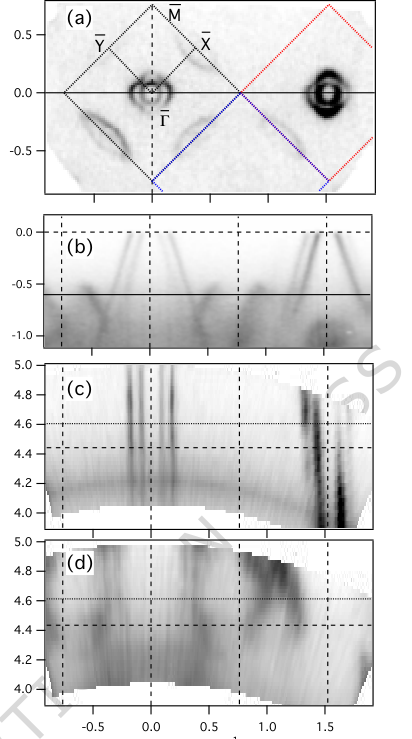 FIG. 3. Electronic structure of LaAgAs2 from ARPES. (a) The Fermi surface is taken at hν = 70
Mathematical & Logical Mechanism
The Master Equation
The central mathematical relationship employed in this paper to extract fundamental electronic properties from experimental data is the thermal damping factor ($R_T$) from the Lifshitz-Kosevich (LK) model. This equation quantifies how the amplitude of quantum oscillations diminishes with increasing temperature, allowing for the determination of the effective mass of charge carriers.
$$ R_T = \frac{\alpha T m^*/B}{\sinh(\alpha T m^*/B)} \quad (1) $$
Term-by-Term Autopsy
Let's break down each element of this equation to understand its individual contribution and significance:
-
$R_T$:
1) Mathematical Definition: This is the thermal damping factor, a dimensionless quantity that represents the reduction in the amplitude of quantum oscillations due to the thermal broadening of the Fermi-Dirac distribution.
2) Physical/Logical Role: Its role is to model the observed decrease in the amplitude of quantum oscillations as the temperature of the material increases. As the system gets warmer, the thermal energy causes electrons to occupy a wider range of energy states, effectively "smearing out" the discrete Landau levels. This blurring reduces the sharpness and magnitude of the oscillations. The authors use this factor to fit the temperature dependence of the Fast Fourier Transform (FFT) amplitudes obtained from their quantum oscillation measurements (as seen in Fig. 2d,h).
3) Why this form: The specific functional form involving the hyperbolic sine ($\sinh$) arises naturally from the quantum statistical mechanics of electrons in a magnetic field, specifically from the summation over Landau levels weighted by the Fermi-Dirac distribution. It accurately captures the transition from temperature-independent behavior at very low temperatures to exponential damping at higher temperatures. -
$\alpha$:
1) Mathematical Definition: A fundamental constant defined as $\alpha = \frac{2\pi^2 k_B m_e}{e\hbar}$. Its numerical value is approximately $14.69 \text{ T/K}$.
2) Physical/Logical Role: This term serves as a universal scaling constant that incorporates several fundamental physical constants: the Boltzmann constant ($k_B$), the electron rest mass ($m_e$), the elementary charge ($e$), and the reduced Planck constant ($\hbar$). It effectively translates temperature into an energy scale that is directly comparable to the spacing of Landau levels in a magnetic field. It ensures unit consistency and provides a universal proportionality for the thermal damping effect.
3) Why multiplication: It's a product of fundamental constants, reflecting their combined influence on the energy scale of thermal broadening relative to magnetic quantization. -
$T$:
1) Mathematical Definition: The absolute temperature of the system, measured in Kelvin (K).
2) Physical/Logical Role: This is the primary experimental variable that directly influences the thermal damping. Higher temperatures mean more thermal energy is available, leading to greater thermal broadening and, consequently, a stronger damping of the quantum oscillations. The authors systematically vary $T$ (e.g., from 2 K to 25 K in their experiments) to observe how the oscillation amplitudes change, and then use this observed dependence for fitting.
3) Why multiplication: Temperature directly scales the thermal energy, which in turn scales the damping effect. -
$m^*$:
1) Mathematical Definition: The effective mass of the charge carriers, typically expressed in units of the electron rest mass ($m_e$). It is mathematically related to the curvature of the electronic band structure around the Fermi level by $m^* = \hbar^2 / [\partial^2 E(k) / \partial k^2]$.
2) Physical/Logical Role: This is the crucial physical parameter that the authors aim to extract from their experimental data. The effective mass describes how charge carriers (electrons or holes) behave within the crystal lattice, accounting for their interactions with the periodic potential. A smaller effective mass implies a steeper band dispersion (energy changes rapidly with momentum), indicating lighter, more mobile carriers. Such light carriers are often characteristic of Dirac-like bands, which are central to topological materials. The paper uses the extracted $m^*$ values (e.g., $m_\alpha = 0.094m_e$ and $m_\beta = 0.21m_e$) to infer the nature of the Fermi pockets, suggesting strong band dispersions and potentially linear Dirac bands.
3) Why multiplication: The effective mass directly influences the energy separation of Landau levels and, therefore, how susceptible the system's quantum states are to thermal broadening. -
$B$:
1) Mathematical Definition: The average inverse magnetic field, defined as $B = 1/[(1/B_{max} + 1/B_{min})/2]$, used in the FFT analysis, measured in Tesla (T).
2) Physical/Logical Role: The magnetic field is responsible for quantizing the electron energy levels into discrete Landau levels. The energy spacing between these levels is directly proportional to the magnetic field strength $B$. A stronger magnetic field leads to larger Landau level separation, making the quantum oscillations more resilient to thermal damping. The inverse field is used because quantum oscillations are periodic in $1/B$. The average inverse field represents the magnetic field range over which the FFT analysis is performed.
3) Why division: The magnetic field appears in the denominator because a larger $B$ increases the Landau level spacing, which makes the quantum states less sensitive to thermal energy and thus results in a smaller damping factor. -
$\sinh(\cdot)$:
1) Mathematical Definition: The hyperbolic sine function, $\sinh(x) = (e^x - e^{-x})/2$.
2) Physical/Logical Role: This function is essential for accurately modeling the non-linear, exponential-like damping behavior. At very low temperatures, where the argument $x = \frac{\alpha T m^*}{B}$ is small, $\sinh(x) \approx x$, leading to $R_T \approx 1$ (minimal damping). However, at higher temperatures, where $x$ becomes large, $\sinh(x) \approx e^x/2$, which results in an exponential decay of the oscillation amplitude, precisely matching the expected thermal broadening effects.
3) Why this function: Its inclusion is a direct consequence of the quantum mechanical derivation of the Lifshitz-Kosevich formula, specifically from the summation over Landau levels weighted by the Fermi-Dirac distribution.
Step-by-Step Flow
Let's trace the journey of an "abstract data point" – representing the amplitude of a quantum oscillation at a given temperature and magnetic field – through the Lifshitz-Kosevich equation to determine the effective mass:
-
Experimental Observation: The process begins with experimental measurements. The researchers apply a magnetic field ($B$) to the LaAgAs$_2$ sample and measure the quantum oscillation amplitude (e.g., in magnetization or resistivity) at various temperatures ($T$). These raw oscillations are then processed using Fast Fourier Transform (FFT) to identify distinct oscillation frequencies and their amplitudes.
-
Initial Parameter Guess: To start the fitting, an initial guess for the effective mass ($m^*$) of the charge carriers associated with a particular oscillation frequency is made.
-
Thermal Energy Scaling: The measured temperature $T$ is first multiplied by the fundamental constant $\alpha$. This step converts the macroscopic temperature into an energy scale that is relevant to the quantum mechanical energy levels within the material. The product $\alpha T$ represents the thermal energy available to perturb the quantum states.
-
Carrier Inertia Integration: The scaled thermal energy ($\alpha T$) is then multiplied by the guessed effective mass ($m^*$). This product, $\alpha T m^*$, now quantifies the "thermal blurring energy" per unit of magnetic field strength, taking into account how "heavy" or "light" the charge carriers are. Lighter carriers (smaller $m^*$) are inherently less susceptible to thermal blurring at a given temperature.
-
Magnetic Field Quantization: The result ($\alpha T m^*$) is subsequently divided by the average inverse magnetic field ($B$) over which the oscillations were analyzed. This division by $B$ (which is mathematically equivalent to multiplication by the average magnetic field strength) accounts for the spacing of the Landau levels. A stronger magnetic field (larger $B$) leads to wider separation between Landau levels, making the quantum states more robust against thermal blurring. The resulting dimensionless quantity, $\frac{\alpha T m^*}{B}$, is the argument for the hyperbolic sine function and represents the ratio of thermal energy to the Landau level spacing.
-
Non-linear Damping Calculation: This dimensionless argument is then fed into the hyperbolic sine function, $\sinh(\frac{\alpha T m^*}{B})$. This is the critical step where the non-linear, exponential-like damping behavior is applied. The $\sinh$ function ensures that at low temperatures (small argument), the damping is minimal, and at higher temperatures (larger argument), the damping becomes significant and exponential, accurately reflecting the physical phenomenon.
-
Damping Factor Output: Finally, the term $\frac{\alpha T m^*}{B}$ (the argument of the $\sinh$ function) is divided by the result from the $\sinh$ function. This calculation yields the theoretical thermal damping factor $R_T$ for the current $m^*$ guess, temperature, and magnetic field. If $R_T$ is close to 1, there is little damping; if it is much smaller than 1, the oscillations are heavily damped.
-
Iterative Fitting: The calculated $R_T$ values (for various temperatures) are then compared to the experimentally observed damping of the FFT amplitudes. The effective mass $m^*$ is iteratively adjusted using a fitting algorithm until the theoretical $R_T$ curve provides the best possible fit to the experimental data points. This iterative process allows for the precise determination of $m^*$ for each observed oscillation frequency.
Optimization Dynamics
The Lifshitz-Kosevich model itself is a physical law, not an optimization algorithm. However, it is used within an optimization framework to extract the effective mass ($m^*$) from experimental data. The "optimization" here refers to the process of fitting the theoretical $R_T$ curve to the measured temperature dependence of the quantum oscillation amplitudes.
-
Loss Landscape: The "loss landscape" in this context is defined by a metric that quantifies the discrepancy between the experimentally measured FFT amplitudes (as a function of temperature) and the $R_T$ values predicted by the Lifshitz-Kosevich model for a given $m^*$. The objective is to find the $m^*$ value that minimizes this discrepancy. For a single parameter fit like this, the loss landscape is typically well-behaved, featuring a clear global minimum. A common loss function would be the sum of squared errors (least squares).
-
Iterative Updates: The paper states that the FFT amplitudes versus temperature curves are "well-fitted by $R_T$", implying the use of an iterative fitting algorithm. While the specific algorithm is not detailed, standard non-linear regression techniques are likely employed. These could include:
- Least Squares Fitting: This is the most straightforward approach, where the algorithm minimizes the sum of the squared differences between the observed FFT amplitudes and the theoretical $R_T$ function.
- Gradient-Based Methods: Algorithms like gradient descent or its more sophisticated variants (e.g., Levenberg-Marquardt) would calculate the gradient of the loss function with respect to $m^*$. This gradient indicates the direction and magnitude of change in $m^*$ that would reduce the loss. The $m^*$ value is then iteratively updated in this direction.
- Numerical Optimization Libraries: Researchers often use specialized software libraries that implement robust non-linear fitting algorithms, which efficiently navigate the loss landscape.
-
Behavior of Gradients: During the fitting process, the gradients of the loss function with respect to $m^*$ guide the optimization. A steep gradient indicates that a small adjustment to $m^*$ will significantly impact the fit, while a flatter gradient suggests that $m^*$ is close to an optimal value or has less influence on the fit in that region. The algorithm follows these gradients to iteratively refine $m^*$. The derivative of the $R_T$ function with respect to $m^*$ is well-defined, allowing for efficient gradient calculations.
-
Convergence: The iterative fitting process continues until a predefined convergence criterion is met. This might be when the change in $m^*$ between successive iterations falls below a certain tolerance, or when the reduction in the loss function becomes negligible. Once converged, the algorithm yields the optimal effective mass ($m^*$) that best describes the thermal damping observed in the quantum oscillation amplitudes. The reported effective masses ($m_\alpha = 0.094m_e$ and $m_\beta = 0.21m_e$) are the result of this successful convergence, indicating that the fitting procedure was robust and stable.
Results, Limitations & Conclusion
Experimental Design & Baselines
The authors meticulously designed a multi-pronged experimental approach, complemented by theoretical calculations, to rigorously investigate the crystal and electronic structures of LaAgAs$_2$. The core of their experimental validation rested on synthesizing high-quality single crystals, which was a crucial prerequisite given that previous studies were hampered by the lack of such samples. These crystals were grown using a self-flux method with excess Ag and As, ensuring phase purity and excellent crystallinity, as confirmed by out-of-plane X-ray Diffraction (XRD) patterns and sharp Laue diffraction spots (Fig. 1d,e).
To ruthlessly prove their mathematical claims regarding structural distortions and their impact on electronic properties, the researchers employed a combination of:
- Single-crystal X-ray Diffraction (XRD): This technique was used to precisely determine the crystal structure, lattice parameters, and atomic positions of LaAgAs$_2$ at various temperatures (300 K, 200 K, 80 K). The architecture here was to confirm the orthorhombic structure (space group: $Pbcm$) and, critically, to identify the cis-trans distortion of the As1 square net into chains (Fig. 1a-c). This structural detail was the foundational evidence for their hypothesis about the material's deviation from typical square-net semimetals.
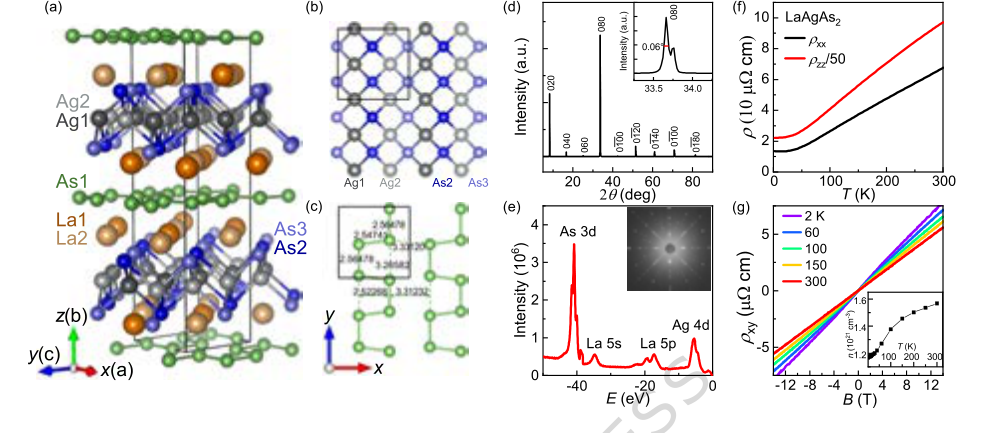 FIG. 1. Crystal structure and basic physical properties of LaAgAs2. (a) Crystal structure of
- Quantum Oscillation Measurements (de Haas-van Alphen (dHvA) and Shubnikov-de Haas (SdH)): These experiments probed the Fermi surface topology and carrier properties. Magnetization $M(B)$ and magnetoresistance $MR(B)$ were measured at low temperatures and high magnetic fields (up to 14 T, with $B \parallel b$). The oscillatory components ($\Delta M$ and $\Delta \rho$) were extracted by subtracting a smooth polynomial background. Fast Fourier Transformation (FFT) was then applied to these oscillations to reveal distinct frequencies ($F_\alpha = 94$ T and $F_\beta = 158$ T). The Onsager relation, $F = (\hbar/2\pi e) A_F$, was used to convert these frequencies into Fermi surface cross-sectional areas ($A_{F,\alpha} = 0.90 \text{ nm}^{-2}$ and $A_{F,\beta} = 1.51 \text{ nm}^{-2}$). Furthermore, the temperature dependence of the FFT amplitudes was fitted using the Lifshitz-Kosevich model to extract effective masses ($m_\alpha = 0.094m_e$ and $m_\beta = 0.21m_e$). The angular dependence of these frequencies (Fig. 2g inset) was crucial to establish the quasi-2D character of the Fermi surfaces. The Hall resistivity $\rho_{xy}(B)$ measurements provided carrier concentration and confirmed hole-type carrier dominance (Fig. 1g).
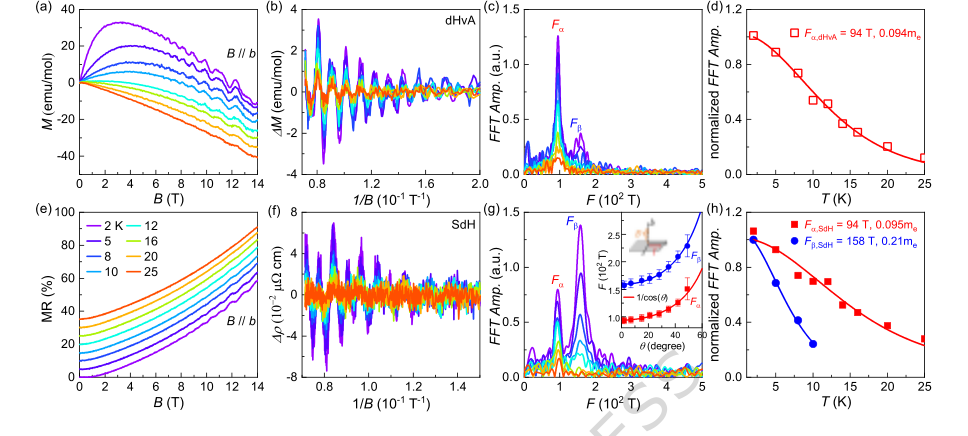 FIG. 2. Quantum oscillations in LaAgAs2. (a)(e) Magnetic field dependence of magnetization
-
Angle-Resolved Photoemission Spectroscopy (ARPES): This technique directly mapped the electronic band structure and Fermi surface. Measurements were performed at different photon energies (70 eV and 100 eV) to probe both in-plane and out-of-plane electronic dispersions (Fig. 3, 4, 5). High-resolution ARPES was employed to resolve fine features of the Fermi pockets, including the splitting of hole bands. The experimental architecture here was to directly visualize the electronic states and compare them against theoretical predictions.
-
Density Functional Theory (DFT) Calculations: These first-principles calculations served as a theoretical baseline and validation tool. They were performed using the Vienna ab-initio Simulation Package (VASP) to compute the electronic structure, density of states (DOS), and band structures with and without spin-orbit coupling (SOC) (Fig. 6, 7). Crucially, calculations were also performed for a hypothetical tetragonal LaAgAs$_2$ structure (where cis-trans chains were artificially arranged into a square net) to isolate and quantify the impact of the observed orthorhombic distortion. Parity analysis using the irvsp code was used to determine the Z2 topological characteristics.
The "victims" (baseline models) that LaAgAs$_2$ was compared against, and ultimately shown to differ from, were the well-established square-net-based topological semimetals, such as LaAgSb$_2$, REAgSb$_2$, and other AMPn$_2$ compounds. These materials are typically expected to host robust Dirac bands originating from undistorted square nets.
What the Evidence Proves
The combined experimental and theoretical evidence provides a definitive, undeniable proof that LaAgAs$_2$ is not a conventional square-net semimetal, but rather a topological material exhibiting multiple topological states due to its unique structural distortion.
-
Impact of Cis-Trans Distortion: The single-crystal XRD results unequivocally showed that LaAgAs$_2$ crystallizes in an orthorhombic structure where the As1 square net is distorted into cis-trans chains. This structural finding was the linchpin. DFT calculations then rigorously demonstrated that this cis-trans distortion transforms the 2D linear Dirac bands, which would typically arise from an undistorted square net (as seen in the hypothetical tetragonal structure calculations), into quasi-1D trivial bands. This directly refutes the expectation for a standard square-net semimetal and highlights the distortion as the core mechanism altering the electronic topology.
-
Multiple Topological States: The DFT calculations, particularly with spin-orbit coupling, predicted the coexistence of a nontrivial Z2 topological surface state (TSS) and a bulk 3D Dirac semimetal (TDS) state around the zone center (Fig. 7b). While ARPES could not directly observe these states because they are located above the Fermi level, the quantum oscillation measurements provided strong corroborating evidence. The observed small effective masses ($m_\alpha = 0.094m_e$, $m_\beta = 0.21m_e$) and quasi-2D character of the Fermi pockets are consistent with the presence of nontrivial topological states. Specifically, the $F_\alpha$ oscillation, with its lower frequency, is assigned to the bulk TDS cone, which is predicted to be closer to the Fermi level than the TSS cone. This indicates the presence of nearly massless carriers, a hallmark of Dirac materials.
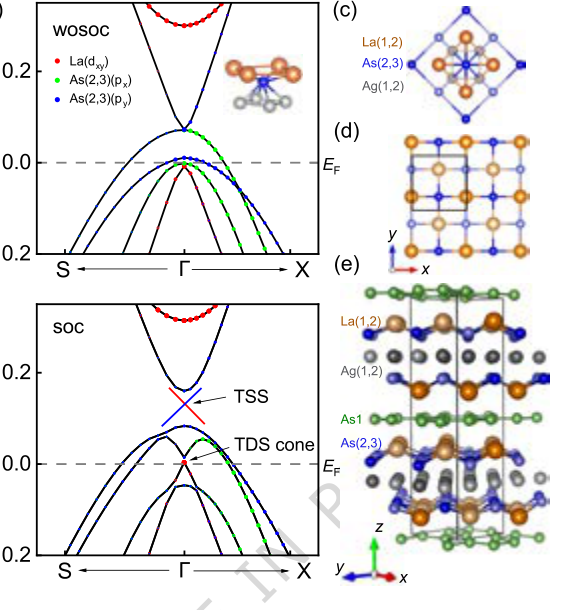 FIG. 7. The enlarged view of the calculated band structure around the Γ point. Panels (a) and
- Distinct Electronic Structure: ARPES measurements revealed a Fermi surface strikingly different from typical square-net-based semimetals like LaAgSb$_2$. It showed quasi-2D Dirac-like hole pockets at the zone center and quasi-1D elliptical electron pockets at the zone boundary (Fig. 4). The large resistive anisotropy ratio ($\rho_{zz}/\rho_{xx} \sim 70$) further supported the quasi-2D nature of the electronic structure. These experimental observations align well with the DFT predictions that the cis-trans distortion significantly reduces square-net-derived states, making states from the buffer layers (As(2,3) and La) more dominant in the physical properties. This is a clear departure from the "victim" AMPn$_2$ compounds where the Pn square net typically dictates the electronic structure.
In essence, the authors architected their experiments to first identify the structural anomaly (cis-trans chains via XRD), then characterize its electronic consequences (quantum oscillations and ARPES), and finally, use theoretical modeling (DFT) to explain how this structural change leads to a fundamentally different and more complex topological electronic structure than anticipated for a "failed" square-net semimetal. The definitive evidence is the direct observation of the distorted structure and the subsequent experimental and theoretical confirmation of multiple topological states, rather than the single, square-net-derived Dirac bands expected in its undistorted counterparts.
Limitations & Future Directions
While this study brilliantly elucidates the complex topological nature of LaAgAs$_2$, it also highlights several limitations and opens up exciting avenues for future research.
One notable limitation is that the predicted topological surface state (TSS) and bulk Dirac semimetal (TDS) states, though theoretically identified, could not be directly captured by ARPES measurements. This is because these states are located well above the Fermi level. This presents a challenge for full experimental validation of their exact dispersion and spin texture. Furthermore, the highly delocalized nature of La's $d$ orbitals and As1's $p$ orbitals made it challenging to generate well-localized Wannier orbitals for subsequent surface state calculations via the surface Green's function method, which could have provided more detailed theoretical insights into the surface states.
Another point of contention lies in the discrepancies between DFT calculations and ARPES measurements regarding the precise size of the 1D electron pocket at the X point, the presence of an additional tiny pocket within it, and the absence of 3D electron pockets along the S-Y direction in ARPES. These differences are attributed to the extreme sensitivity of the electron pockets to the exact structure of the cis-trans chains, suggesting that even minor structural variations or surface effects not fully captured by bulk DFT could play a role. The presence of crystal twinning, confirmed by XRD and ARPES, also affects macroscopic transport properties, potentially masking intrinsic anisotropies related to the quasi-1D electron pockets. ARPES also struggled to distinguish between different surface terminations, which could be due to small domain sizes, insignificant spectroscopic differences, or surface reconstruction.
Looking ahead, these findings offer several compelling discussion topics for further development:
-
Strain Engineering for Topological Control: The paper points out the extremely small orthorhombicity of LaAgAs$_2$ and its sister compounds, suggesting a high sensitivity to uniaxial strain. A routinely achievable strain of $\sim 1\%$ could potentially re-establish tetragonal order or drive the system into an "uncharted territory" with an easily tunable electronic structure, where the topological character to be turned on and off on demand. This opens up a fascinating research direction into strain-controlled topological quantum devices, where mechanical manipulation could dynamically switch or modulate topological phases. How might such strain affect the delicate balance between the cis-trans distortion and the emergence of specific topological states?
-
Discovery of New Topological Building Blocks: The identification of the puckered [LaAs] layer as a new structural motif capable of hosting multiple topological states is a significant conceptual advance. This moves beyond the traditional square-net paradigm and provides a new guideline for the rational design of topological materials. Future work could involve systematically exploring other rare-earth pnictides with similar puckered layers or investigating how variations in the rare-earth element (e.g., different lanthanides) or pnictogen (e.g., Sb, Bi) might tune the electronic and topological properties of this [LaAs]-like building block. This could lead to a new family of topological materials with tailored properties.
-
Advanced Spectroscopic Probes for Above-Fermi-Level States: To fully validate the predicted TSS and TDS states, which lie above the Fermi level, new or advanced experimental techniques are needed. This could involve two-photon ARPES, inverse photoemission spectroscopy, or time-resolved ARPES to probe excited states. Developing in situ techniques that can simultaneously monitor structural distortions and electronic band structures under various external stimuli (like strain or temperature) would also be invaluable for understanding the dynamic interplay between crystal structure and topology.
-
Role of Interlayer Bonding and Orbital Character: The study emphasizes the crucial role of La and As(2,3) orbitals in the observed quantum transport phenomena, differing from the interlayer bonding in iron-based superconductors. Further theoretical and experimental investigations into the precise nature of these bonding interactions and their contribution to the topological states could provide deeper insights. Can specific chemical substitutions or interface engineering strategies enhance or suppress these orbital contributions to fine-tune the topological properties?
-
Mitigating Twinning Effects: The presence of twinning complicates the interpretation of macroscopic transport measurements. Future efforts could focus on growing untwinned single crystals or developing methods to detwin existing crystals. Studying untwinned samples would allow for a clearer understanding of the intrinsic anisotropic transport properties associated with the quasi-1D electron pockets and potentially reveal new topological phenomena masked by the twinning effect.
Connections to Other Fields
Mathematical Skeleton
The pure mathematical core of this work involves the theoretical prediction and experimental characterisation of topological electronic states, specifically Z2 topological insulators and bulk Dirac semimetals, in crystalline materials. This is achieved by levereging first-principles band structure calculations, topological invariant analysis, and experimental Fermi surface mapping via quantum oscillation spectroscopy.
Adjacent Research Areas
Topological Quantum Chemistry
This research directly connects to the field of Topological Quantum Chemistry, which provides a systematic framework for classifying and predicting topological materials based on their crystal symmetry and electronic band structure. The paper utilizes Density Functional Theory (DFT) calculations to determine the electronic band structure and subsequently applies the Fu-Kane formula [56] to calculate Z2 topological invariants. This calculation relies on the parity eigenvalues of occupied states at time-reversal invariant momenta (TRIM) points, a fundamental concept in TQC, to identify nontrivial topological characteristics. The authors explicitly state that their findings were "cross-validated through the application of topological quantum chemistry methods" [5, 62, 63], highlighting this direct link. A representative work in this area is: Bradlyn, B. et al. Topological quantum chemistry. Nature 547, 298-305 (2017).
Quantum Oscillation Spectroscopy in Topological Materials
The study employs quantum oscillation measurements, specifically de Haas-van Alphen (dHvA) and Shubnikov-de Haas (SdH) oscillations, to experimentally probe the Fermi surface geometry and carrier effective masses. The Onsager relation, $F = (\hbar/2\pi e) A_F$, is used to extract the cross-sectional area of the Fermi surface ($A_F$) from the measured oscillation frequencies ($F$). Furthermore, the Lifshitz-Kosevich model, given by the thermal damping factor $R_T = \frac{\alpha T m^*/B}{\sinh(\alpha T m^*/B)}$ (Equation 1), is applied to determine the effective masses ($m^*$) from the temperature dependence of the oscillation amplitudes. These techniques are crucial for characterising the electronic structure, including the quasi-2D Fermi pockets and potential linear Dirac bands, which are hallmarks of topological semimetalsl. This methodology is widely used in experimental condensed matter physics to understand the electronic properties of novel materials. A foundational text for this field is: Shoenberg, D. Magnetic Oscillations in Metals. Cambridge University Press (1984).