
Large phonon-drag thermopower polarity reversal in Ba-doped KTaO3
This study reports the observation of phonon-drag thermopower polarity reversal in Ba-doped KTaO3 thin films, mediated by electron-phonon Umklapp scattering.
Background & Academic Lineage
The Origin & Academic Lineage
The problem addressed in this paper originates from the long-standing quest to develop materials with high thermoelectric efficiency, particularly at low temperatures. Thermoelectric materials are crucial for energy conversion, allowing the direct conversion of heat into electrical energy and vice-versa. A key metric for their performance is the Seebeck coefficient, also known as thermopower. While various mechanisms can enhance this coefficient, "phonon-drag" is one such intriguing phenonmenon.
Historically, it has been widely observed that in most metallic crystals where charge conduction is dominated by a single type of carrier (either electrons or holes), the phonon-drag thermopower exhibits the same sign as the diffusion thermopower. This conventional understanding implies that if a material conducts electricity primarily via electrons (n-type carriers), its thermopower should be negative. However, a significant "pain point" in the field has been the rare, yet observed, instances where this rule is broken, leading to a polarity reversal. The paper mentions Rubidium (Rb) as the only previously known case where phonon-drag and diffusion thermopowers have opposite signs.
The fundamental limitation of previous approaches, particularly in understanding this polarity reversal, was the lack of a convincing, tunable experimental platform. While electron-phonon Umklapp scattering was speculated to be the underlying mechanism for such reversals (as in Rb), direct evidence was scarce. Previous studies, such as those on bulk Ba-doped KTaO$_3$ by Sakai et al. (Ref 27), failed to observe phonon-drag or sign changes, possibly due to limitations in sample preparation (bulk vs. thin films) or carrier concentration. The inability to systematically vary parameters like electron density and Fermi surface size in materials like Rb, which has a constant electron density, prevented a thorough investigation and confirmation of the Umklapp scattering mechanism. This paper overcomes this limitation by utilizing Ba-doped KTaO$_3$ thin films, whose doping levels and thus electron densities can be precisely controlled, offering a much more robust platform to study and confirm the electron-phonon Umklapp scattering mediated thermopower polarity reversal.
Intuitive Domain Terms
-
Phonon-drag: Imagine a busy hallway where people (electrons) are trying to move. Now, a strong wave of sound (phonons, which are vibrations in the material's crystal lattice) sweeps through the hallway. If this sound wave is powerful enough and interacts strongly with the people, it can "drag" them along, pushing them in its direction. This collective "push" from the phonons on the electrons is phonon-drag, and it can significantly boost the electrical current or voltage generated by a temperature difference.
-
Thermopower (Seebeck coefficient): Think of a "thermal battery." If you heat one end of a special material and keep the other end cool, a voltage difference appears across it. The thermopower is simply a measure of how much voltage you get for each degree of temperature difference. A higher thermopower means the material is more efficient at converting heat into electricity. Its sign tells you if the "hot" end becomes positive or negative.
-
Umklapp scattering: Picture a game of billiards where the table has a special boundary. In a "normal" collision between two balls (an electron and a phonon), they just change direction a bit, but their overall movement continues in roughly the same general direction. In an "Umklapp" collision, it's like one ball (the electron) hits another near this special boundary, and instead of just deflecting, it dramatically bounces backwards or in a completely opposite general direction. This is a very effective way to reverse the momentum of the electron, which is critcal for the observed polarity reversal.
-
Brillouin zone: Consider a repeating pattern, like a wallpaper design. The Brillouin zone is the fundamental "unit cell" in the momentum space for electrons and phonons within a crystal. It defines the unique range of momenta that particles can have. When an electron's momentum, after interacting with a phonon, "crosses" out of this fundamental unit into an adjacent one, it triggers an Umklapp scattering event, much like hitting a boundary and reflecting.
Notation Table
| Notation | Description |
|---|---|
| $k$ | Electron wave vector (related to electron momentum) |
| $q$ | Phonon wave vector (related to phonon momentum) |
| $k'$ | Scattered electron wave vector after interaction |
| $g$ | Reciprocal lattice vector (defines the boundaries of the Brillouin zone) |
| $n$ | Carrier concentration (number of charge carriers per unit volume) |
| $T$ | Temperature |
| $S$ | Seebeck coefficient (Thermopower) |
| $\rho$ | Electrical resistivity |
| $\Theta$ | Characteristic temperature for Umklapp scattering |
| $q_{min}$ | Minimum phonon wave vector required for Umklapp scattering |
Problem Definition & Constraints
Core Problem Formulation & The Dilemma
The central problem addressed by this paper is to challenge and expand the conventional understanding of phonon-drag thermopower in n-type materials. Traditionally, in most metallic crystals and degenerately doped semiconductors, the phonon-drag thermopower is expected to have the same sign as the diffusion thermopower, which itself is determined by the polarity of the majority charge carriers (negative for electrons, positive for holes). This expectation limits the design space for thermoelectric materials, as the sign of the Seebeck coefficient is largely fixed by the carrier type.
The Input/Current State for this research involves n-type Ba-doped KTaO$_3$ (KTO) thin films, grown with precise control over carrier concentrations via molecular-beam epitaxy. These films, by virtue of being n-type, are expected to exhibit a negative thermopower. Previous studies on bulk KTaO$_3$ did not report significant phonon-drag effects or any sign reversal in thermopower.
The Output/Goal State is to achieve and explain a polarity reversal in the thermopower of these n-type KTaO$_3$ thin films at low temperatures. Specifically, the aim is to observe a transition from a negative to a positive thermopower upon cooling, despite the material having only n-type carriers. This observation would demonstrate a novel mechanism for engineering thermoelectric properties, mediated by electron-phonon Umklapp scattering.
The missing link or mathematical gap lies in the mechanism that allows for this polarity reversal. In Normal (N) electron-phonon scattering, the scattered electron momentum $\mathbf{k}'$ is given by $\mathbf{k}' = \mathbf{k} + \mathbf{q}$, where $\mathbf{k}$ is the electron wave vector and $\mathbf{q}$ is the phonon wave vector. In this scenario, $\mathbf{k}'$ generally retains the same directionality as $\mathbf{k}$, leading to a thermopower sign consistent with the carrier type. The paper seeks to bridge this gap by demonstrating that under specific conditions, electron-phonon Umklapp (U) scattering becomes dominant. In U-scattering, the scattered electron momentum is given by $\mathbf{k}' = \mathbf{k} + \mathbf{q} - \mathbf{g}$, where $\mathbf{g}$ is a reciprocal lattice vector. When the condition $|\mathbf{k} + \mathbf{q}| > |\mathbf{g}/2|$ is met, this Bragg reflection can cause $\mathbf{k}'$ to have a momentum opposite to $\mathbf{k}$, thereby reversing the polarity of the phonon-drag Seebeck coefficient. This precise condition and its manifestation in an n-type material represent the crucial gap this paper attempts to bridge.
The dilemma that has trapped previous researchers is the inherent trade-off between enhancing the magnitude of the Seebeck coefficient (e.g., through phonon drag) and controlling its sign. While phonon drag can significantly boost thermopower, its sign has conventionally been tied to the carrier type, limiting the ability to design materials with desired positive thermopower in n-type systems or vice-versa. This paper directly addresses this painful trade-off by identifying a mechanism that allows for a sign reversal, offering a pathway to overcome this fundamental limitation in thermoelectric material design.
Constraints & Failure Modes
The problem of observing and understanding phonon-drag thermopower polarity reversal is insanely difficult due to several harsh, realistic constraints:
-
Physical Constraints:
- Umklapp Condition for Fermi Surface Size: For electron-phonon Umklapp scattering to occur and mediate polarity reversal, the Fermi surface must be sufficiently large to satisfy the condition $|\mathbf{k} + \mathbf{q}| > |\mathbf{g}/2|$. This necessitates high carrier concentrations, as demonstrated by the heavily doped sample (3.7×10$^{20}$ cm$^{-3}$) where the Fermi surface spans 80% of the Brillouin zone. In samples with lower carrier concentrations, this condition is not met, and no polarity reversal is observed.
- Dominance of Electron-Phonon Interactions: Phonon-drag effects are only significant if electron-phonon interactions are stronger (i.e., have a shorter relaxation time) than other phonon scattering mechanisms, particularly phonon-phonon and phonon-defect scattering. This requires high-quality materials with minimal defects and typically occurs at lower temperatures.
- Narrow Temperature Window for Phonon Drag: Phonon-drag thermopower exhibits a non-monotonic temperature dependence, peaking at a specific low temperature (roughly the Debye temperature divided by 5). At higher temperatures, phonon-phonon Umklapp scattering overwhelms electron-phonon interactions, suppressing phonon drag. At very low temperatures, the exponential decrease in phonon population leads to a sharp drop in Seebeck coefficient. This narrow and specific temperature range makes experimental observation challenging.
- Substrate Influence in Thin Films: In thin films, acoustic phonons from the substrate can propagate into the film and interact with charge carriers, influencing the phonon drag signal. While the chosen KTaO$_3$ and TbScO$_3$ substrates have comparable Debye temperatures, ensuring that the interfaces are "transparent" to acoustic phonons is crucial for consistent results.
- Material Specificity: KTaO$_3$ is an incipient ferroelectric with a complex band structure (e.g., spin-orbit coupling, J=3/2 states splitting). These intrinsic properties are critical for the observed phenomena, making the findings potentially non-generalizable to all n-type semiconductors.
-
Computational & Experimental Constraints:
- Precise Doping Control: Achieving the exact high carrier concentrations required to meet the Umklapp condition in KTaO$_3$ thin films is a significant experimental hurdle. Molecular-beam epitaxy (MBE) is used to provide this precise doping control, but maintaining consistency across samples can be difficult.
- Thermal Conductivity Measurement Limitations: Accurately determining the thermoelectric figure of merit ($zT$) for thin films is complicated because the thermal conductivity measurement is often dominated by the substrate's contribution, making it challenging to isolate the film's intrinsic thermal conductivity. This limits the precise quantification of the material's overall thermoelectric efficiency.
- Low-Temperature Measurement Accuracy: Performing reliable transport measurements at very low temperatures (down to 2 K) demands specialized cryostats and highly sensitive instrumentation. The uncertainty in Seebeck coefficient measurements can be substantial at these low temperatures (e.g., about 10% below 100 K), which can obscure subtle effects or make precise characterization problematic.
- Deconvolving Scattering Mechanisms: Distinguishing between Normal and Umklapp electron-phonon scattering, and isolating the phonon-drag contribution from the diffusion thermopower, requires careful analysis of temperature-dependent transport data and robust theoretical modeling, such as fitting resistivity data with specific functions (e.g., $\rho = \rho_0 + AT^2 + B \exp(-\Theta/T)$).
Why This Approach
The Inevitability of the Choice
The core of this research is not about selecting a computational algorithm from a predefined set, but rather about experimentally observing and understanding a specific, subtle physical phenomenon: phonon-drag thermopower polarity reversal mediated by electron-phonon Umklapp scattering. In this context, the "approach" refers to the choice of material system and the experimental methodology employed. The authors' decision to use Ba-doped KTaO$_3$ (KTO) thin films was not merely a preference, but a necessity driven by the unique requirements for observing this effect.
The exact moment the authors (or the scientific community at large) realized traditional methods were insufficient can be traced to the limitations of previous studies. While the mechanism of phonon-drag thermopower having an opposite sign to diffusion thermopower was speculated in materials like Rubidium (Rb) (Ref 10), Rb has a constant electron density. This makes it difficult to systematically vary the conditions that govern Umklapp scattering, particularly the size of the Fermi surface. To provide a "more convincing argument" for this mechanism, a material system was needed where the doping level, and consequently the electron momentum ($k$) and Fermi surface size, could be precisely controlled. KTaO$_3$ thin films, with their ability for precise doping control via molecular-beam epitaxy (MBE), emerged as the ideal platform to fulfill this critical requirement. Without this tunability, it would be challenging to definitively link the observed polarity reversal to the Umklapp condition.
Comparative Superiority
The qualitative superiority of this approach lies in its ability to provide a controlled and systematic investigation into the conditions governing electron-phonon Umklapp scattering and its impact on thermopower. Unlike previous studies on materials with fixed carrier concentrations, the use of Ba-doped KTaO$_3$ thin films allows for the precise tuning of the carrier density across a wide range (from $3.3 \times 10^{18}$ cm$^{-3}$ to $3.7 \times 10^{20}$ cm$^{-3}$). This structural advantage is paramount.
This tunability directly enables the researchers to manipulate the size of the Fermi surface. As explained in the paper, the Umklapp condition, $|k+q| > |g/2|$, where $k$ is the electron wave vector, $q$ is the phonon wave vector, and $g$ is a reciprocal lattice vector, is highly dependent on the Fermi surface spanning a significant portion of the Brillouin zone. By varying the doping, the authors could transition from a lightly doped regime where the Fermi surface is small and the Umklapp condition is not met (Fig. 1(a)), to a heavily doped regime where the Fermi surface spans 80% of the Brillouin zone, satisfying the Umklapp condition (Fig. 1(b)). This systematic control provides an overwhelmingly superior way to isolate and confirm the role of Umklapp scattering compared to previous "gold standard" methods that lacked such flexibility. It's not about handling noise better in a computational sense, but about creating the exact physical conditions necessary to observe and verify a complex quantum phenomenon with high fidelity.
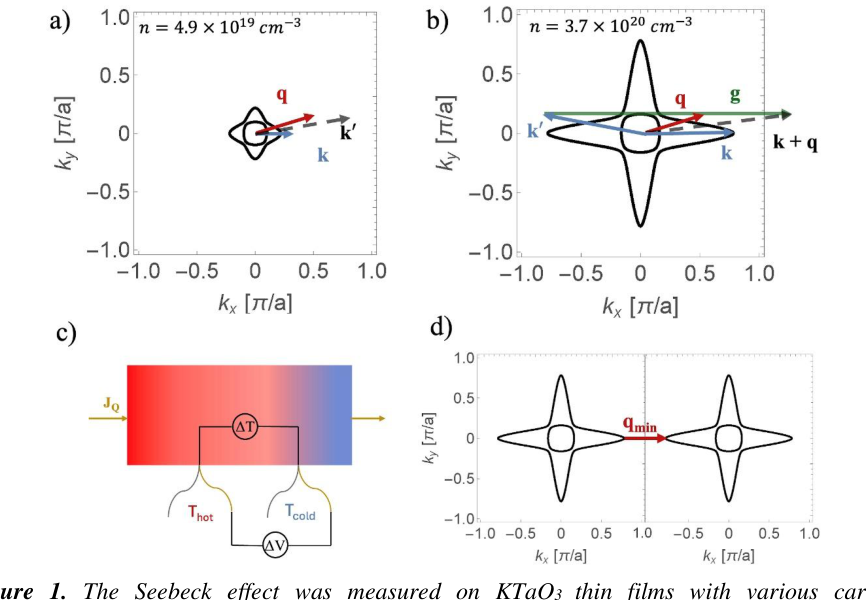 Figure 1. The Seebeck effect was measured on KTaO3 thin films with various carrier
Alignment with Constraints
The chosen method of growing and characterizing Ba-doped KTaO$_3$ thin films perfectly aligns with the inherent constraints of observing phonon-drag thermopower polarity reversal.
- Precise Doping Control: The problem requires varying the Fermi surface size to satisfy the Umklapp condition. Molecular-beam epitaxy (MBE) of KTaO$_3$ films allows for "precise doping control," as stated in the abstract and methods. This is the "marriage" between the need for tunable carrier concentration and the solution's unique growth capabilities.
- Material Properties: KTaO$_3$ is an incipient ferroelectric with a cubic structure and a specific band structure (Ta 5d-derived conduction band, J=3/2 states due to spin-orbit coupling) that supports itinerant electrons. These intrinsic properties make it a suitable host for the electron-phonon interactions necessary for phonon drag.
- Low Defect Concentration: For phonon drag to occur, electron-phonon interactions must be stronger than phonon-phonon and phonon-defect scattering. The paper notes that "low defect concentration is needed to minimize phonon-defect scattering and increase the chance of electron-phonon scattering." While not explicitly detailed as a constraint in a prior section, the high-quality epitaxial growth implicitly addresses this by minimizing structural defects.
- Low Temperature Measurements: Phonon drag effects are typically observed at low temperatures. The experimental setup, utilizing a Lakeshore helium-cooled cryostat, allows for measurements down to 2 K, perfectly meeting the requirement for observing these temperature-sensitive phenomena.
- Thin Film Geometry: The paper implies that thin films are advantageous for observing phonon drag. A previous investigation (Ref 33) demonstrated that "phonon drag contribution is generally less pronounced in bulk samples compared to thin films," which is consistent with the authors' observations. This suggests that the thin film geometry itself is a crucial aspect of the chosen method, enhancing the detectability of the effect.
Rejection of Alternatives
The paper provides clear reasoning for why alternative approaches, particularly the use of bulk samples, would have failed or provided less conclusive evidence for the observed phenomenon.
The most significant rejection of an alternative comes from the comparison with previous work by Sakai et al. (Ref 27), who investigated the thermoelectric properties of bulk Ba-doped KTaO$_3$. The authors explicitly state that Sakai et al. "did not observe any phonon-drag or sign-change in their thermopower measurements." The key reasons for this failure in bulk samples were:
1. Lower Carrier Concentrations: The bulk samples had carrier concentrations from mid-$10^{18}$ to low $10^{20}$ cm$^{-3}$, which were generally lower than the heavily doped thin films in the present study. This resulted in a "smaller Fermi surface," which is insufficient to satisfy the Umklapp condition $|k+q| > |g/2|$.
2. Weak Electron-Phonon Interaction: The absence of phonon drag in the bulk samples indicated "weak electron-phonon interaction" in those materials. In contrast, the thin film approach, particularly with higher carrier concentrations, enabled the strong electron-phonon coupling necessary for Umklapp scattering.
Furthermore, the paper implicitly rejects materials with fixed carrier densities, such as Rb (Ref 10), as a primary platform for this study. While Rb was theoretically considered, its constant electron density prevents the systematic variation of the Fermi surface size. The ability to change the doping level in KTaO$_3$ films allowed for a "more convincing argument" by demonstrating how the Umklapp condition is met only at specific, high carrier concentrations. The experimental data from the lightly doped KTaO$_3$ samples within this very study also serves as an internal "rejection" of insufficient conditions; these samples did not show the polarity reversal, underscoring the necessity of the heavily doped regime for the effect to manifest. This careful comparison within the paper itself strengthens the argument for the chosen approach.
Mathematical & Logical Mechanism
The Master Equation
The absolute core mathematical equation that underpins the analysis of the material's electrical transport properties, particularly the anomalous temperature dependence of resistivity, is a phenomenological model used to fit experimental data. This equation disentangles the contributions of various electron scattering mechanisms to the total electrical resistivity ($\rho$) as a function of absolute temperature ($T$).
$$ \rho = \rho_0 + AT^2 + B \exp\left(-\frac{\Theta}{T}\right) $$
Term-by-Term Autopsy
Let's tear this equation apart to understand the mathematical definition and physical/logical role of each term, variable, and operator:
- $\rho$: This variable represents the total electrical resistivity of the material, typically measured in units such as $\Omega \cdot \text{m}$ or $\mu\Omega \cdot \text{cm}$. Mathematically, it is the dependent variable, the quantity being modeled. Physically, it quantifies the material's opposition to the flow of electric current, arising from various scattering events experienced by charge carriers.
- $\rho_0$: This is the residual resistivity. Mathematically, it's a constant term, representing the resistivity as temperature approaches absolute zero ($T \to 0$). Physically, $\rho_0$ accounts for temperature-independent scattering mechanisms. These primarily include scattering of electrons by static imperfections in the crystal lattice, such as impurities, point defects, and grain boundaries. It sets a baseline resistance that persists even when thermal vibrations are minimal.
- $A$: This is a coefficient that scales the contribution of electron-electron and equilibrium electron-phonon scattering processes. Mathematically, it's a proportionality constant for the $T^2$ term. Physically, the $AT^2$ term describes the resistivity component that arises from electron-electron interactions and electron scattering by thermally excited phonons in the "normal" (non-Umklapp) regime. This quadratic temperature dependence is characteristic of many metals and degenerately doped semiconductors at higher temperatures, reflecting the increasing probability of these scattering events as thermal energy rises.
- $T$: This variable represents the absolute temperature of the material, measured in Kelvin. Mathematically, it is the independent variable driving the changes in resistivity. Physically, temperature is the primary thermodynamic parameter that dictates the thermal energy available for various scattering mechanisms, influencing the population and energy of phonons and the kinetic energy of electrons.
- $B$: This is a coefficient that determines the magnitude of the Umklapp electron-phonon drag scattering contribution to the total resistivity. Mathematically, it's a pre-exponential factor. Physically, a larger value of $B$ indicates a stronger influence of this specific scattering mechanism on the overall resistivity.
- $\exp\left(-\frac{\Theta}{T}\right)$: This is the exponential term, which specifically models the contribution from Umklapp (U) electron-phonon drag scattering. Mathematically, it's an Arrhenius-like function. Physically, this term captures the characteristic temperature dependence of Umklapp processes. Umklapp scattering requires phonons with sufficient momentum to scatter electrons across the Brillouin zone boundary. The probability of finding such high-momentum phonons decreases exponentially as temperature drops below a certain threshold, $\Theta$, hence the form of this term. This term is crucial for explaining the "peculiar rise" in resistivity at lower temperatures.
- $\Theta$: This parameter represents the minimum temperature (or energy scale) required for the phonon mode to satisfy the Umklapp scattering condition. Mathematically, it acts as an activation energy-like parameter in the exponential term. Physically, it corresponds to the energy needed for an electron to undergo a Bragg reflection due to interaction with a phonon, leading to a large change in its momentum. The paper identifies $\Theta \approx 40 \text{ K}$ as the relevant energy scale for the Umklapp processes observed.
- The addition operators ($+$): The use of addition between the terms signifies that the total electrical resistivity is considered to be the sum of independent or semi-independent contributions from different scattering mechanisms. Each term ($\rho_0$, $AT^2$, and $B \exp(-\frac{\Theta}{T})$) represents a distinct physical process (residual scattering, equilibrium thermal scattering, and Umklapp electron-phonon drag scattering, respectively) that adds to the overall resistance experienced by charge carriers. This additive nature is a common and effective approximation in transport theory for combining different scattering channels.
Step-by-Step Flow
While this equation is a static model describing the composition of resistivity at a given temperature rather than a dynamic process, we can trace how the various physical mechanisms, represented by its terms, contribute to the overall resistivity as temperature changes, making the abstract math feel like a moving mechanical assembly line:
- The Foundation ($\rho_0$): Imagine starting at absolute zero temperature ($T=0 \text{ K}$). At this point, the thermal energy is minimal, and the $AT^2$ and exponential terms effectively vanish. The material's resistivity is solely determined by $\rho_0$. This term acts as the unmoving base of our assembly line, representing the unavoidable resistance from static imperfections like impurities and defects.
- The Rising Tide ($AT^2$): As the temperature $T$ begins to increase from $0 \text{ K}$, the $AT^2$ term kicks in. This component represents the increasing scattering of electrons by the growing thermal vibrations of the lattice (phonons) and by other electrons. As $T$ rises, this term rapidly increases, adding to the base resistivity. This is like a conveyor belt that speeds up with temperature, bringing more "collision events" to the electrons.
- The Umklapp Anomaly ($B \exp(-\frac{\Theta}{T})$): This is where the unique physics of the paper comes into play, particularly at intermediate temperatures.
- Low Temperatures ($T \ll \Theta$): When $T$ is very low, significantly below $\Theta$ (e.g., below 40 K), the exponential term $\exp(-\frac{\Theta}{T})$ is very small, almost zero. This means Umklapp scattering events are rare because there aren't enough high-energy phonons. The contribution from this term is negligible, and resistivity is dominated by $\rho_0$ and the small $AT^2$ term.
- Intermediate Temperatures ($T \approx \Theta$): As $T$ increases and approaches $\Theta$ (around 40 K), the exponential term starts to become significant. The number of phonons with sufficient energy to cause Umklapp scattering increases, and these resistive Umklapp processes become more prominent. This term can cause a "peculiar rise" in resistivity as $T$ increases towards $\Theta$, even as other scattering mechanisms might be decreasing or leveling off. This is like a specialized machine on the assembly line that only activates and adds a significant component to the product within a specific temperature range.
- Higher Temperatures ($T \gg \Theta$): At temperatures well above $\Theta$, the exponential term approaches $B$. However, at these higher temperatures, the $AT^2$ term typically dominates the overall resistivity, and the Umklapp contribution, while present, might be less pronounced in its change compared to the quadratic term.
In summary, as an abstract temperature "data point" moves from low to high values, the equation dynamically weighs the contributions of these three distinct scattering mechanisms, revealing how the material's total electrical resistivty is constructed by these underlying physical processes.
Optimization Dynamics
The mechanism described by the resistivity equation $\rho = \rho_0 + AT^2 + B \exp(-\frac{\Theta}{T})$ does not "learn" or "update" in the sense of an adaptive physical system or a machine learning model. Instead, the "optimization dynamics" refers to the process of determining the best-fit parameters ($\rho_0, A, B, \Theta$) by fitting this phenomenological model to experimental resistivity data. This is a curve fiting process, not an intrinsic learning behavior of the material itself.
Here's how this "optimization" typically unfolds:
- Experimental Data Collection: First, a set of experimental resistivity measurements, $\rho_{exp}$, are obtained across a range of temperatures, $T_i$. These data points represent the "ground truth" that the model aims to explain.
- Defining a Goodness-of-Fit Metric (Loss Function): To quantify how well the model matches the data, a loss function is established. A common choice is the sum of squared errors (least-squares method). For each experimental data point $(T_i, \rho_{exp}(T_i))$, the model predicts a value $\rho_{model}(T_i; \rho_0, A, B, \Theta)$. The loss function, $L$, is then:
$$ L(\rho_0, A, B, \Theta) = \sum_{i=1}^{N} \left( \rho_{exp}(T_i) - \rho_{model}(T_i; \rho_0, A, B, \Theta) \right)^2 $$
The objective of the optimization is to find the set of parameters that minimizes this loss function. - Exploring the Parameter Space: The parameters ($\rho_0, A, B, \Theta$) define a multi-dimensional "loss landscape." Each point in this landscape corresponds to a unique combination of parameter values and an associated loss value. The goal is to find the "valley" or minimum in this landscape.
- Iterative Parameter Adjustment: Numerical optimization algorithms, such as non-linear least-squares fitting (e.g., Levenberg-Marquardt algorithm), are employed to navigate this landscape.
- Gradients: These algorithms iteratively adjust the parameters. In essence, they calculate the "gradient" of the loss function with respect to each parameter. The gradient points in the direction of the steepest increase in loss.
- Updates: The parameters are then updated by taking a step in the opposite direction of the gradient (i.e., towards the steepest decrease in loss). For example, a parameter $P$ might be updated as $P_{new} = P_{old} - \text{step\_size} \times \frac{\partial L}{\partial P}$.
- Convergence: This iterative process continues, refining the parameter values with each step, until the algorithm converges. Convergence occurs when the changes in the parameters become very small, or the loss function reaches a minimum (or a predefined tolerance). At this point, the algorithm has found the "optimal" set of parameters that best describe the experimental data according to the chosen model and loss function.
The paper's statement that "The adition of the Umklapp term in eq. 3 gives the dashed curve in Fig. 3 (b) and explains very well the peculiar rise in resistivty below 40 K" implies that this fitting process was successfully carried out. The resulting parameters provide quantitative insights into the relative strengths and temperature dependencies of the different scattering mechanisms, allowing the authors to attribute the observed polarity reversal to Umklapp electron-phonon drag scattering.
Results, Limitations & Conclusion
Experimental Design & Baselines
The experimental design was meticulously crafted to isolate and rigorously validate the phenomenon of phonon-drag thermopower polarity reversal. The core strategy involved comparing the thermoelectric properties of Ba-doped KTaO$_3$ thin films with varying carrier concentrations, specifically targeting conditions where electron-phonon Umklapp scattering would either be present or absent.
Three distinct Ba-doped KTaO$_3$ thin films were grown via molecular-beam epitaxy (MBE) on KTaO$_3$ (100) and TbScO$_3$ (110)$_o$ substrates. These films were engineered to have precise carrier concentrations: $3.3 \times 10^{18} \text{ cm}^{-3}$, $4.9 \times 10^{19} \text{ cm}^{-3}$, and $3.7 \times 10^{20} \text{ cm}^{-3}$. This range was crucial, as the Fermi surface size, which is directly related to carrier concentration, dictates whether the Umklapp condition ($|k+q| > |g/2|$) can be met.
Prior to transport measurements, the samples underwent thorough characterization. X-Ray Diffraction (XRD) (Fig. 2a) confirmed the single-phase nature and crystallographic alignment of the films with their substrates. Hall measurements (Fig. 2b and 2c) accurately determined the carrier concentrations and mobilities, providing the foundational parameters for interpreting thermoelectric behavior. Scanning Transmission Electron Microscopy (STEM) (Fig. 2d) offered further structural insights.
For thermoelectric transport, the Seebeck effect (thermopower) and electrical resistivity were measured across a broad temperature range, from 2 K up to 300 K, using a Lakeshore helium-cooled cryostat. A strain gauge provided heat, and two type T thermocouples, along with a Keithley nanovoltmeter, precisely measured temperature differences and thermopower voltages (schematically shown in Fig. 1c). The uncertainty in Seebeck coefficient measurements was carefully considered, being about 2% at 300 K and approximately 10% below 100 K.
The "victims" or baseline models in this study were primarily the lightly doped KTaO$_3$ samples themselves. These samples, with carrier concentrations of $3.3 \times 10^{18} \text{ cm}^{-3}$ and $4.9 \times 10^{19} \text{ cm}^{-3}$, were expected to exhibit conventional n-type behavior (negative thermopower) due to their smaller Fermi surfaces not satisfying the Umklapp condition. This provided a direct comparison against the heavily doped sample. Furthermore, the authors implicitly challenged previous bulk KTaO$_3$ studies (e.g., Sakai et al., Ref 27) which did not report phonon-drag or sign-change, thereby highlighting the unique capabilities of their thin-film approach and higher doping levels. The paper also references Rb (Ref 9) as the only other known material to exhibit opposite sign thermopower, but argues that the tunable doping in KTaO$_3$ offers a more robust platform for studying this mechanism.
What the Evidence Proves
The evidence presented in this paper definitively proves the occurrence of a large phonon-drag thermopower polarity reversal in heavily Ba-doped KTaO$_3$ thin films, directly attributable to electron-phonon Umklapp scattering. The experimental architecture ruthlessly demonstrated this by contrasting the behavior of samples where the Umklapp condition was met versus those where it was not.
The most compelling evidence comes from the Seebeck coefficient measurements (Fig. 3a). The heavily doped sample ($3.7 \times 10^{20} \text{ cm}^{-3}$) exhibited a striking sign reversal. At temperatures above 100 K (the diffusive regime), its thermopower was negative, as expected for an n-type semiconductor. However, upon cooling, around 80 K, the thermopower reversed polarity to become positive, reaching a sharp peak near 40 K, before decreasing again at lower temperatures. This positive thermopower, despite the presence of only n-type carriers, is the undeniable signature of Umklapp-mediated phonon drag, where the Bragg reflection reverses the electron momentum. In stark contrast, the lightly doped samples ($3.3 \times 10^{18} \text{ cm}^{-3}$ and $4.9 \times 10^{19} \text{ cm}^{-3}$) maintained a negative thermopower down to 2 K, consistent with conventional n-type conduction and the absence of Umklapp scattering. The $4.9 \times 10^{19} \text{ cm}^{-3}$ sample did show a small negative phonon drag effect at low temperatures, but crucially, no polarity reversal.
The underlying mechanism is further substantiated by the Fermi surface analysis (Fig. 1a and 1b). For the heavily doped sample, the Fermi surface was calculated to span 80% of the Brillouin zone, satisfying the Umklapp condition $|k+q| > |g/2|$. This allows the electron's momentum to be reversed upon scattering. For the lightly doped samples, the Fermi surface was smaller, failing to meet this condition, thus preventing the polarity reversal.
Additional hard evidence comes from the electrical resistivity measurements (Fig. 3b). In the heavily doped sample, the resistivity exhibited an unusual behavior: it decreased with increasing temperature below 40 K. This is counter-intuitive for normal metals and degenerately doped semiconductors, where resistivity typically increases with temperature. This anomaly is perfectly explained by the inclusion of an Umklapp term in the resistivity equation: $\rho = \rho_0 + AT^2 + B \exp(-\Theta/T)$. The exponential term, representing U-phonon-drag scattering, accurately models the peculiar rise in resistivity below 40 K, aligning precisely with the peak observed in the Seebeck coefficient. This correlation provides strong, independent confirmation of the Umklapp scattering mechanism.
Finally, the calculated power factor (PF) and thermoelectric figure of merit (zT) (Fig. 3c and 3d) for the heavily doped sample reached an astounding value of 0.032 at 40 K, approximately an order of magnitude higher than the lightly doped samples. This quantitative enhancement underscores the practical significance of phonon drag in boosting thermoelectric performance in these thin films. The authors also identified the transverse acoustic (TA) phonon mode as the primary contributor to the U-phonon drag, with its maximum contribution expected near 40 K, which aligns well with the observed Seebeck peak.
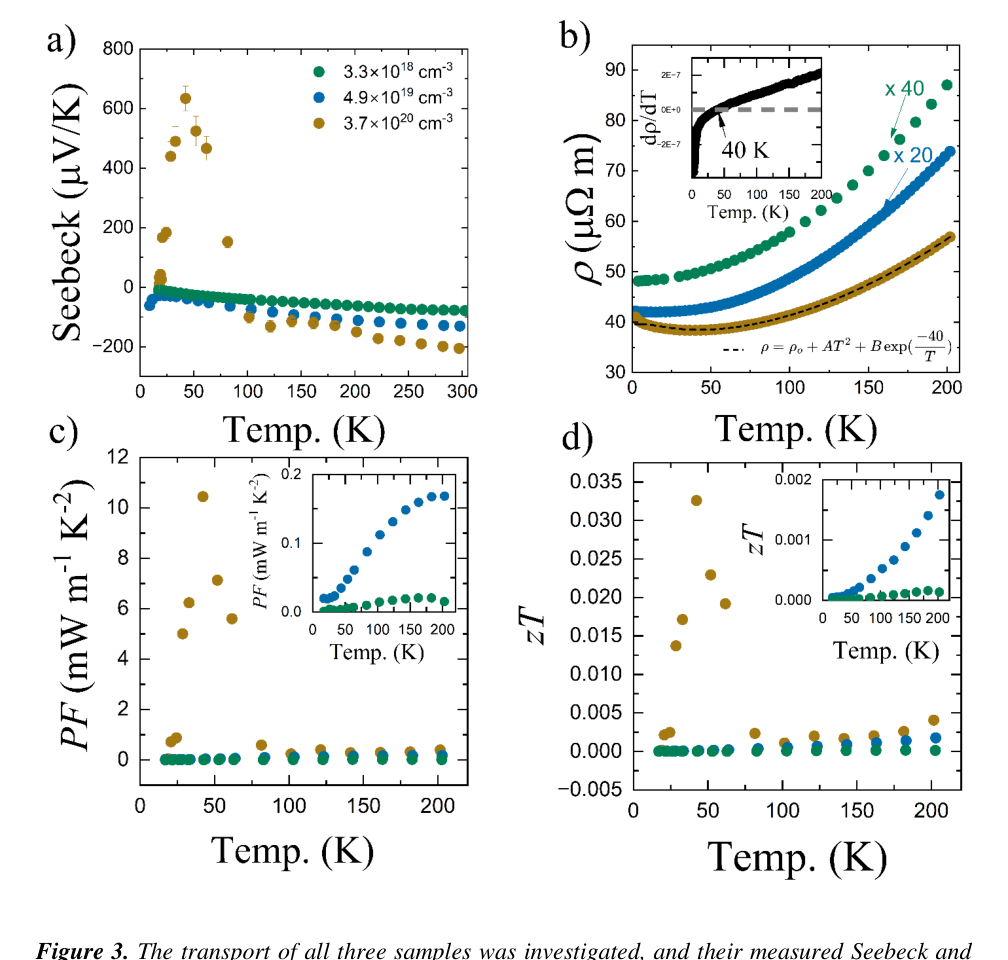 Figure 3. The transport of all three samples was investigated, and their measured Seebeck and
Limitations & Future Directions
While this study presents compelling evidence for phonon-drag thermopower polarity reversal, it's important to acknowledge its limitations and consider avenues for future development.
One notable limitation lies in the thermal conductivity measurements. The authors state that the thermal conductivity of the KTaO$_3$ substrate dominated the measurements, making it impossible to isolate the intrinsic thermal conductivity of the thin film. Consequently, the calculated thermoelectric figure of merit (zT) relies on the substrate's thermal conductivity, which might lead to an underestimation of the film's true zT if the film itself has a lower thermal conductivity. This uncertainty means the full potential of these materials as thermoelectrics might be even greater than reported. Furthermore, the uncertainty in Seebeck coefficient measurements, while acceptable, increases to about 10% below 100 K, which is precisely the temperature range where the most interesting phonon-drag phenomena occur. The role of optical phonon modes, particularly the TO1 mode, was also not fully elucidated. While acoustic phonons were identified as the main players, the potential contribution of optical modes at higher k-points and their interaction with Umklapp scattering remains an area for deeper exploration.
Looking ahead, these findings open up several exciting discussion topics and research directions:
-
Optimizing Thermoelectric Performance: Given the significant enhancement in the power factor and zT due to phonon drag, future work could focus on systematically optimizing the doping level, film thickness, and growth conditions of Ba-doped KTaO$_3$ to maximize the phonon-drag contribution. Can we push the zT even higher by further engineering the Fermi surface and phonon spectrum? This could involve exploring different dopants or heterostructures.
-
Exploring Other Oxide Systems: The observation of this phenomenon in KTaO$_3$, an oxide, is particularly intriguing. Can similar Umklapp-mediated phonon-drag polarity reversals be induced in other complex oxide materials? Many oxides exhibit strong electron-phonon coupling and tunable electronic properties, making them prime candidates for discovering new unconventional thermoelectric materials. This could lead to a new class of high-performance thermoelectrics.
-
Substrate Engineering and Interface Effects: The paper mentions that substrate acoustic phonons can propagate into the thin films and influence phonon drag. This suggests that the choice of substrate and the nature of the film-substrate interface play a critical role. Future studies could systematically vary substrate materials with different Debye temperatures, lattice parameters, and thermal properties to precisely tune the phonon-drag effect and potentially enhance it further. Understanding and controlling interface scattering could be key.
-
Advanced Spectroscopic Probes: To gain a more granular understanding of the electron-phonon interactions and Umklapp scattering events, advanced experimental techniques could be employed. Inelastic neutron or X-ray scattering could directly probe the phonon dispersion and lifetimes, while angle-resolved photoemission spectroscopy (ARPES) could provide detailed information about the Fermi surface topology and electron dynamics, especially how they evolve with doping and temperature.
-
Theoretical Modeling and Predictive Design: The success of the resistivity fitting using an Umklapp term highlights the importance of theoretical models. Future theoretical efforts could aim to develop more sophisticated ab initio calculations that can accurately predict the conditions for phonon-drag polarity reversal in various materials, guiding experimentalists toward new material discoveries. This could involve incorporating more detailed treatments of electron-phonon coupling and scattering mechanisms.
-
Defect Engineering: The paper notes the importance of low defect concentration to minimize phonon-defect scattering. A deeper investigation into the specific types of defects (e.g., oxygen vacancies, Ba interstitials) and their precise impact on electron-phonon Umklapp scattering could lead to strategies for defect engineering to either suppress detrimental scattering or enhance beneficial interactions.
-
Anisotropic Thermoelectrics and Goniopolar Behavior: KTaO$_3$ is known for various exotic properties, including quantum geometrical effects. The brief mention of goniopolar materials like PdCoO$_2$ (which exhibits anisotropic thermopower) raises the question of whether KTaO$_3$ thin films, perhaps grown on different crystallographic orientations or under strain, could be engineered to exhibit highly anisotropic thermoelectric properties or even goniopolar behavior, opening up possibilities for novel device architectures.